
What separates products that quietly survive from those that suddenly accelerate?
That was the central question behind a recent collaboration with BevNET, where we combined three years of sales performance data with the Need Codes behavioral framework to uncover the deeper psychological patterns behind breakout growth.
Rather than looking only at traditional market variables like pricing, distribution, or demographics, we analyzed growth through the lens of human motivation and behavioral friction. By applying AI-powered psychological modeling to high-growth brands and categories, we were able to identify the underlying drivers and barriers shaping consumer decisions at scale.
The findings revealed that successful products often outperform not simply because they meet a functional need, but because they align with deeper emotional and behavioral motivations. The brands gaining momentum were consistently reducing friction, reinforcing identity, or creating experiences that consumers instinctively perceived as rewarding, trustworthy, or socially meaningful.
In many cases, the strongest growth signals were tied less to category trends and more to how effectively brands connected with the psychological realities of modern decision-making.
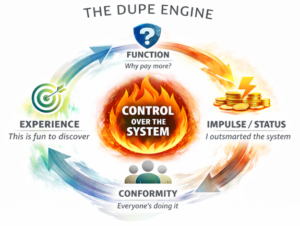
One of the most compelling outcomes of the analysis was the emergence of three recurring behavioral forces that repeatedly appeared across high-growth products and brands. These forces helped explain why certain offerings rapidly gained traction while others with similar functional benefits struggled to scale.
Presenting these insights at BevNET LIVE sparked valuable conversations around the future of consumer intelligence, and how behavioral psychology combined with large-scale data analysis may fundamentally reshape the way brands think about innovation, positioning, and growth strategy.
As markets become more crowded and consumers become more selective, understanding why people buy is becoming just as important as understanding what they buy.