
Over the last several years, many brands have treated the rise of private label and “dupe culture” as a temporary economic reaction — assuming consumers would eventually return to traditional purchasing patterns once financial pressures eased.
The evidence increasingly suggests something much larger is happening.
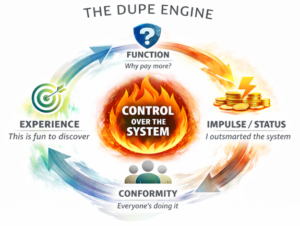
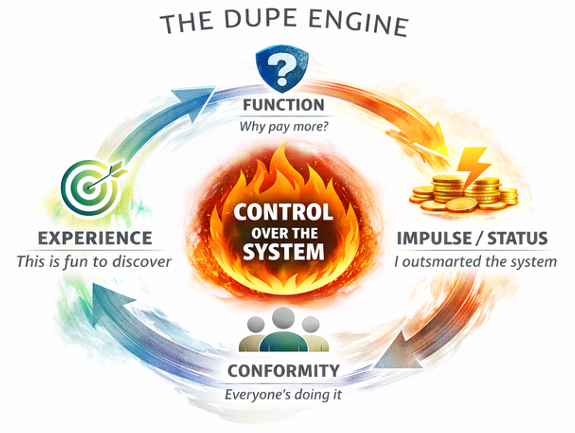
In a recent discussion highlighted by RBC Capital Markets, we explored how value-seeking behavior is evolving from a cyclical response into a lasting cultural and psychological shift. The conversation centered on what I refer to as “The Dupe Engine” — a behavioral flywheel powered by our Need Codes framework, helping explain why consumers are increasingly drawn toward alternatives that make them feel smarter, more resourceful, and more in control.
Historically, premium consumption often acted as a signal of status and spending power. Today, those signals are changing. More consumers now derive social value from optimization, insider knowledge, and demonstrating that they “beat the system.” In many cases, finding a high-quality alternative no longer feels like compromise — it feels like competence.
This shift helps explain why trends such as dupes, loud budgeting, and retailer-owned brands have gained cultural momentum far beyond simple price sensitivity. Consumers are not just trying to spend less; they are seeking emotional rewards tied to control, confidence, and discovery.
One of the key insights from the discussion is that consumers process price through multiple psychological lenses simultaneously. Affordability matters, but so do perceptions of fairness, effort, and whether a purchase feels intellectually or emotionally rewarding. Many brands continue to compete only on the functional layer of pricing while missing the emotional, social, and experiential dimensions driving modern behavior.
The most effective brands and retailers are succeeding because they understand this broader behavioral ecosystem. They are creating experiences that reinforce identity, generate discovery, and help consumers feel empowered rather than constrained.
The strategic implication is significant: relying solely on price-gap management may no longer be enough — and in some cases may even weaken brand equity further by reducing competition to a race toward cheaper alternatives.
Consumers are not simply chasing lower prices. Increasingly, they are chasing the feeling of mastering the system itself.